
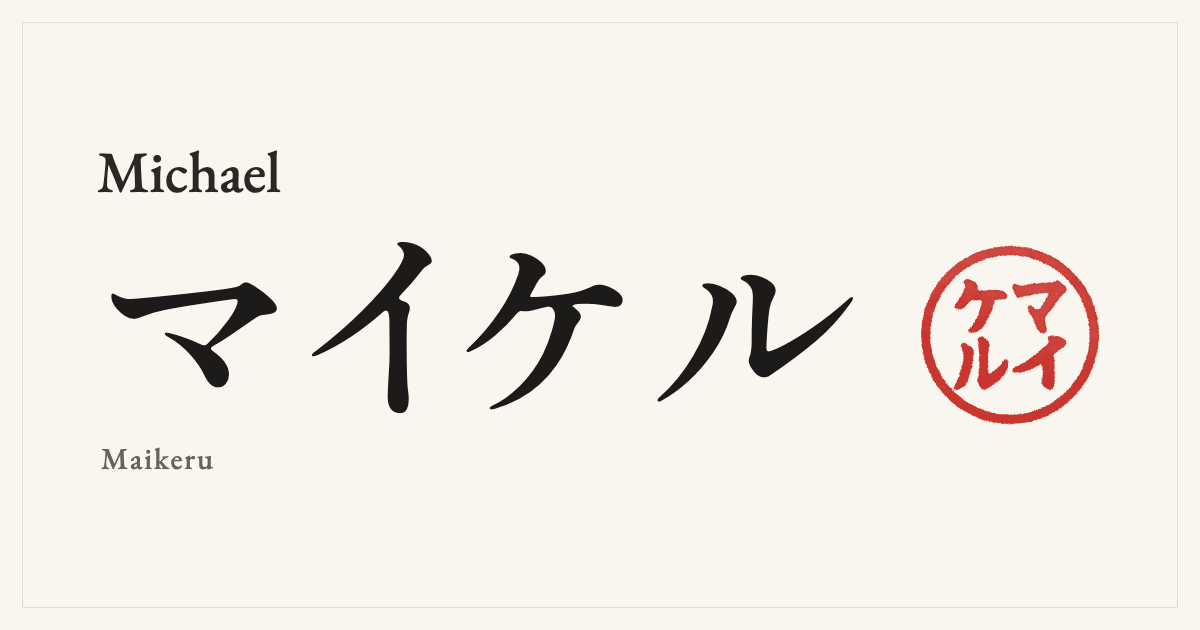
Michael
マイケル
Maikeru
Also written マイクル.
How It Is Said
- マma
- イi
- ケke
- ルru
Maikeru: four beats, each about the same length. Japanese has no strong stress, so the name is said evenly, beat by beat.
By Language
| Language | Katakana | Rōmaji | Note |
|---|---|---|---|
| English | マイケル | Maikeru | the usual form |
| マイクル | Maikuru | also in use | |
| German | ミヒャエル | Mihyaeru |
What Happens to the Sounds
- The English long i, as in Michael, is two beats in Japanese: アイ (ai).
- Japanese has no l. It uses its one sound between l and r, a light tap of the tongue, written ラ リ ル レ ロ: ル (ru).
- The German ch is a breath in the throat: written ヒ (hi) after e or i, and ハ, ホ or フ after a, o or u; so in German, Michael is ミヒャエル (Mihyaeru).
The archangel Michael is ミカエル (Mikaeru) in Japanese.
To Type It
On a computer with Japanese input switched on, type maikeru, then press F7 on Windows or Control+K on a Mac to turn it into katakana. On a phone, type the same letters with the Japanese keyboard and choose マイケル among the suggestions.
The Same Name in Other Languages
Why Katakana
In Japan, names from abroad are written in katakana, the script for words from other languages. Kanji versions of Western names are mostly invented, and a Japanese reader often sees odd meanings in them; the katakana is what a Japanese person would really write. More on katakana and names
