

A Japanese seal of your name: a hanko, the small red stamp used in Japan where other countries sign. Type your name in Latin letters and we write it in katakana first, or type it in kanji or kana. The seal is laid out as a carver in Japan would set it.
1The Name
2The Seal
3Keep It or Stamp It
The seal is saved as a PNG picture 1200 pixels wide with a clear background, for a document, a slide or a card. Sign a PDF opens with the seal in its tray, ready to stamp beside your signature; the document stays on your computer.
Next Your name in katakana, how each form is said, and its card · Sign a PDF, with the seal beside your signature
How to Use It
- Type your name. In Latin letters, and choose its language if you know it: we write it in katakana, the usual form of each word first, and offer the other forms in use. Or type it in kanji or kana, family name first, as a Japanese name is written: 山田 花子.
- Choose the seal. Round for a person, square for a company or an artist, oval for a long name; then one of the five styles, and what goes on it: the whole name, or one name alone. Only the layouts in which every character keeps its shape are offered.
- Keep it or stamp it. Save the seal as a PNG picture with a clear background, or press “Stamp it on a PDF”: Sign a PDF opens with the seal in its tray, ready to stamp beside your signature.
Examples
Six seals made on this page. Press “Try this one” to make it yourself, then change what you like.
-
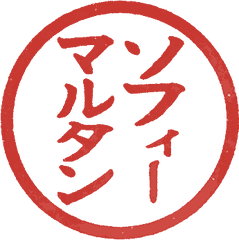
Sophie Martinソフィー マルタンSofī Marutan
A French name in katakana, both names in two columns on a round seal, in the brush style.
-
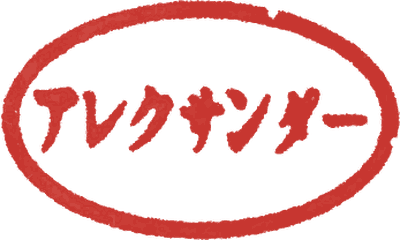
Alexander SchmidtアレクサンダーArekusandā
A long given name alone, in one line across an oval seal, in the old seal style.
-
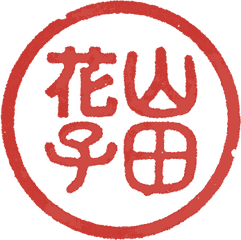
山田 花子Yamada Hanako
A Japanese name in kanji, family name first, in seal script, as a registered seal is often carved.
-
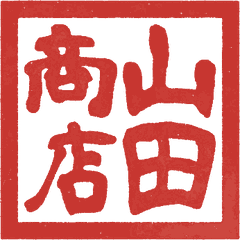
山田商店Yamada Shōten, the Yamada shop
A shop's square seal in the clerical style, as it is stamped on an invoice.
-
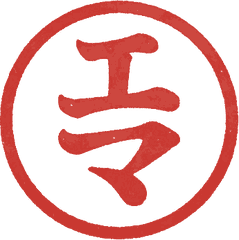
EmmaエマEma
A short name, large on a round seal, in the print style.
-
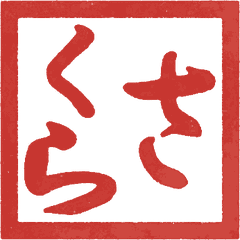
さくらSakura
A given name in hiragana, as typed, on a square seal of the kind artists press beside their signature, in the brush style.
What a Hanko Is
A hanko (判子), also called an inkan (印鑑), is a small stamp carved with a name and pressed in red ink. People in Japan press one on a delivery slip, a form at the city office, a lease or a bank form, and many offices approve their papers with a row of seals. What the stamp leaves on the paper is the impression (印影, in'ei), and that is what this page makes.
Round, Square or Oval
A person's seal is round. Everyday seals are about 10 to 12 millimetres across; a registered seal is larger. A square seal (角印, kakuin) is the seal of a company or an office, and painters and calligraphers often sign their work with one. An oval seal (小判型, koban-gata, after the old oval gold coin) gives a long name more room. The page offers every shape your name fits.
Long Names Go into Columns
A seal is read from top to bottom, and its columns from right to left, as Japanese is written. A seal maker never squeezes a character to make it fit: a longer name is set in two or three columns, or on an oval seal, and the long mark ー and the small kana each keep a place of their own. This page does the same, and offers only the layouts in which every character keeps its shape. Most seals in Japan carry a single name, so where a shape cannot hold the whole name, the page offers the first or the last name alone.
The Five Styles
- Brush (楷書, kaisho): the regular hand of brush writing, the easiest to read.
- Print (明朝, minchō): the typeface of Japanese books and newspapers.
- Old seal (古印体, koin): drawn after the old seals of Japan, its strokes soft and broken in places, as a worn seal prints. A favourite for everyday seals.
- Clerical (隷書, reisho): the official hand of China two thousand years ago, wide, flat and easy to read.
- Seal script (篆書, tensho): the oldest of the five, and the usual style of registered and bank seals, because it is hard to read and so hard to copy. It is older than kana, so the page offers it for names in kanji.
Questions People Ask
Can I use this seal on official documents?
A seal made here is a picture of a seal, and it serves wherever a picture of a seal is accepted: an approval inside an office, a PDF form, an invoice, a letter or a card. Since 2021 most forms of Japan’s national government no longer ask for a seal at all. Where a seal is registered, it must be carved and pressed in ink: the registered seal (実印, jitsuin), whose impression is kept at the city office and certified for buying a house or a car, and the bank seal (銀行印, ginkōin), kept on file at your bank. If an office in Japan asks you for a seal, ask there which form of your name it should carry.
Can a foreigner have a hanko?
Yes. Many people from abroad who live in Japan have one, usually with their name in katakana, the form Japanese documents use for a name from abroad. A foreign resident can also register a seal at the city office; it must show the name as the office records it, in Latin letters, in katakana where the office records a katakana form, or a registered alias, and each city sets its own details, so ask there before you have one carved. Many banks in Japan now accept a signature from foreign customers instead of a seal.
Which name goes on a hanko?
Most seals in Japan carry the family name alone: the everyday seal (認印, mitomein) that people press on a delivery slip or an office form. A registered seal often carries the full name, and many women choose their given name for the bank seal, so that it outlasts a change of family name. For a name from abroad, people usually choose the name they are called by. The page offers every choice that fits the shape you pick.
How big is a hanko?
An everyday seal is about 10 to 12 millimetres across, a bank seal 12 to 15, and a registered seal usually 13.5 to 18; a city office registers a seal larger than an 8-millimetre square that fits within a 25-millimetre one. On a document, a round seal about 12 millimetres wide sits well beside a typed name: in a word processor, set the picture’s width to 1.2 cm. Sign a PDF places it at that size for you.
Can I sign my artwork with it?
Yes. Painters and calligraphers in Japan and China sign their work with a seal, often a square one, pressed in red beside the signature or in its place; the signature and seal on a finished work are called rakkan (落款). Save the seal as a PNG with a clear background and place it on a digital painting, a print or a card. In seal script or the old seal style it looks most like an artist’s seal.
