

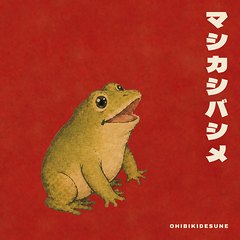

沖縄地方、雨、風、ところによりマシカシバシメ。Today's forecast for Okinawa: rain, wind, and in some areas マシカシバシメ.
The song マシカシバシメ (Mashikashibashime) opens the album with a weather forecast: four sentences for the Okinawa region, in the plain Japanese of a broadcast. Between them runs a refrain in the yōkai’s own tongue, which we do not translate. Here are five words from the forecast, the turn of grammar every forecast leans on, and where to go next.
Five Words from the Song
-
地方
chihō · region
沖縄地方 is “the Okinawa region”. Forecasts divide Japan into regions and name each one first.
沖縄地方は、暖かく湿った空気の影響で、雨や雷雨が降りやすい天気が続くでしょう
-
雷雨
raiu · thunderstorm
雷 (thunder) and 雨 (rain) in one word. Rain on its own is 雨 ame.
沖縄地方は、暖かく湿った空気の影響で、雨や雷雨が降りやすい天気が続くでしょう
-
断続的に
danzoku-teki ni · on and off
断続 is a stopping and starting; 的に turns the noun into a word that says how, as “-ly” does in English.
明日は一日を通して断続的に激しい雨が降る見込みです
-
最高気温
saikō kion · the day’s high (temperature)
最高 (highest) and 気温 (air temperature). Its pair is 最低気温 saitei kion, the low; 三十度 sanjū-do is thirty degrees.
最高気温は三十度、最低気温は二十六度の予想です
-
注意
chūi · care, attention
十分注意してください, “please take full care”: the one thing the forecast asks of anyone.
沿岸部では、強い風と高い波に十分注意してください
The Grammar: でしょう, the Forecast’s “Probably”
A forecast speaks of tomorrow, and tomorrow has not happened yet. Japanese has a polite word for that: でしょう (deshō), “probably”, “it seems”, at the end of a sentence. 天気が続くでしょう: the weather will likely continue.
The song’s forecast has two more ways to say what is still to come: 見込みです (mikomi desu, “is expected”) and 予想です (yosō desu, “is forecast”). The frogs’ own forecast adds a phrase every learner meets in a Japanese weather report: ところにより (tokoro ni yori, “in some areas”), for rain that falls here and there.
In conversation, でしょう with a rising voice asks the listener to agree: 雨でしょう?, “It’s raining, isn’t it?”
With This Song
- Read the song’s Japanese with furigana, the readings over the kanji.
- Write あめ (ame, rain) on a practice sheet, in hiragana.
- The words as sung, each line with its English, in the band’s room.
Lines in the yōkai’s own tongue are not translated. We also refrain from comment on individual syllables.
